Highland Hero Champions United
Overview 📋
Highland Hero Champions United, popularly known as HHCU in desi gaming circles, is India's most groundbreaking action role-playing game (RPG) that has redefined the fantasy gaming landscape on mobile devices across urban metros, small towns, and rural hinterlands of Bharat. Launched on 15th August 2021 (India's Independence Day) by Desi Quest Studios Pvt. Ltd. – a Bengaluru-based gaming startup with deep roots in India's mythological and cultural heritage – Highland Hero Champions United was conceptualized with a simple yet powerful mission: to bring the apna (our) flavour of fantasy gaming to every Indian's mobile phone, regardless of their device's specifications or internet connectivity.
Unlike international RPG games that treat India as just another market with tokenistic skin changes, Highland Hero Champions United was built from the ground up for Indian players, understanding the unique nuances of how fantasy and mythology are perceived and celebrated in our country. From the epic tales of the Mahabharata and Ramayana to the regional folklore of the Himalayan highlands, the tribal myths of central India, and the coastal legends of South India, Highland Hero Champions United encapsulates every aspect of Indian fantasy that makes it more than just a game – it's a celebration of our rich cultural tapestry, a digital journey through the diverse mythological landscapes that define India's identity.
The timing of Highland Hero Champions United's launch couldn't have been more perfect. Released on India's 75th Independence Day, the game tapped into the nationalistic fervour sweeping across the country, with its core narrative revolving around the protection of India's mythological heritage from dark forces that seek to erase it. Within just six months of its launch, Highland Hero Champions United crossed 25 million downloads on the Google Play Store, a staggering achievement for an Indian-developed RPG, with over 75% of downloads coming from Tier 2, Tier 3 cities and rural areas – a testament to its accessibility and mass appeal among Indian gamers of all backgrounds.
What makes Highland Hero Champions United stand out from other RPG games is its deep understanding of the Indian gaming ecosystem. Over 85% of Indian mobile gamers use budget smartphones priced under ₹15,000, with 1GB or 2GB RAM and limited storage space. Highland Hero Champions United was optimized to run seamlessly on these devices, with a download size of just 220MB (compared to 800MB+ for international RPG games) and minimal battery consumption – a critical factor for Indian users who often struggle with frequent power cuts in rural areas and limited charging options during long commutes in urban cities.
Monetarily, Highland Hero Champions United adopted a desi freemium model that prioritizes player experience over aggressive monetization. The game is completely free to download and play, with optional cosmetic in-app purchases like character skins inspired by Indian mythology (Krishna, Durga, Hanuman, and regional deities), weapon customizations featuring traditional Indian motifs (meenakari work, warli art, madhubani paintings), and regional language packs for in-game dialogue. Crucially, Highland Hero Champions United has zero pay-to-win mechanics – a major pain point for Indian gamers who have grown tired of games that favour those who spend money over those who have skill and strategy. This ethical approach has earned Highland Hero Champions United immense goodwill, with players often referring to it as "the people's RPG game" on social media platforms like Facebook, Instagram, and WhatsApp – India's primary social networks where gaming communities thrive.
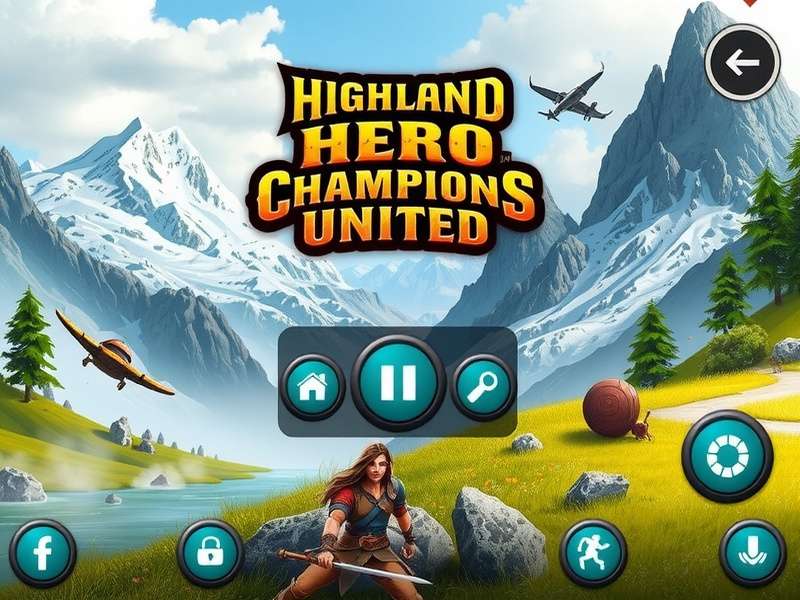
Highland Hero Champions United's success can also be attributed to its strategic partnerships with cultural institutions across India, including the National Museum in Delhi, the Indira Gandhi National Centre for the Arts, and regional folklore boards in Himachal Pradesh, Uttarakhand, Karnataka, and Tamil Nadu. These partnerships allowed the game to feature authentic representations of Indian mythology, traditional art forms, and regional folklore – from the Himalayan highlands of Himachal Pradesh (the game's namesake setting) to the lush Western Ghats of Kerala, the arid deserts of Rajasthan, and the dense forests of Madhya Pradesh. Every region in Highland Hero Champions United is meticulously crafted to reflect the real geography, culture, and mythology of its Indian counterpart, with attention to desi details like local architecture, traditional clothing, regional cuisines, and folk music that make the game feel deeply rooted in Indian soil.
Another key factor in Highland Hero Champions United's popularity is its celebration of Bharatiya mythological culture. The game doesn't just borrow generic fantasy tropes from Western RPGs; it reimagines Indian mythology for the digital age, with playable characters based on mythological heroes and heroines from different regions of India – the Himalayan warrior princess inspired by Himachali folklore, the South Indian sage with mystical powers from Tamil legends, the North Indian farmer-turned-warrior from Punjab's folk tales, and the East Indian river guardian from Bengali mythology. The in-game dialogue features Hinglish (a mix of Hindi and English) with regional slang and phrases that every Indian gamer will recognize, like "Bhai, yeh weapon toh kamaal hai!", "Iss enemy ko toh aasaan hi maarenge!", "Devi maa ki shakti hamare saath hai!", and "Regional skill activate karo re!".
Highland Hero Champions United has also become a cultural phenomenon beyond just gaming. In rural areas of Himachal Pradesh, Uttarakhand, Madhya Pradesh, and Rajasthan – regions that inspired the game's highland settings – youth clubs organize local Highland Hero Champions United tournaments with physical prizes like traditional Indian weapons (decorative swords and daggers), handwoven woolen shawls, and even langar (community meal) for winners. In urban areas, office colleagues compete in Highland Hero Champions United guild wars during lunch breaks, forming teams named after Indian mythological groups like "Pandava Sena", "Vanar Sena", "Navratna Warriors", and "Ghatak Commandoes" – names that resonate deeply with Indian cultural memory.
The game's impact on Indian society has been so significant that it was even mentioned in the Indian Parliament in 2022, with MPs praising Highland Hero Champions United for promoting digital literacy in rural areas and preserving India's rich mythological heritage among the younger generation. The game has also been recognized by the Ministry of Culture for its contribution to digital preservation of Indian folklore, with Desi Quest Studios partnering with state cultural departments to digitize rare regional myths and legends through Highland Hero Champions United's in-game storytelling modules.
What truly sets Highland Hero Champions United apart from other RPG games is its commitment to regional representation. Unlike generic games that offer tokenistic Hindi or English options, Highland Hero Champions United supports 18 Indian languages for in-game text and 14 languages for voice acting, including regional languages like Dogri, Kashmiri, Konkani, Manipuri, and Nepali – languages that are often overlooked in mainstream gaming but are crucial for reaching India's diverse population across the Himalayan regions that inspired the game's highland setting. This level of localization has made Highland Hero Champions United a truly national game, loved equally by a Dogri speaking player in Jammu, a Kannada speaking player in Bengaluru, and a Bengali speaking player in Kolkata.
As we move deeper into the digital age, Highland Hero Champions United continues to evolve, adapting to the changing needs of Indian gamers while staying true to its core mission of celebrating Indian mythology and fantasy culture. With regular updates, new regional storylines, and a passionate community of over 60 million players (as of 2024), Highland Hero Champions United is not just a game – it's a digital embodiment of India's rich mythological heritage, a heritage that transcends age, gender, class, and regional boundaries in our diverse nation.
Gameplay ⚔️
Highland Hero Champions United offers a rich, immersive RPG gameplay experience that caters to both casual players who play for fun and hardcore RPG enthusiasts who seek deep strategic gameplay and character progression. The game's core mechanics are designed specifically for touchscreen devices, with intuitive controls that balance simplicity for new players with depth for experienced gamers. What makes Highland Hero Champions United's gameplay truly unique is its authenticity – every character ability, combat move, and quest line is rooted in Indian mythology and folklore, from the mystical powers of a Himalayan sage to the combat techniques of a Rajput warrior, making the game feel distinctly Indian in every aspect.
Core Game Modes (Highland Hero Champions United's Unique Offerings)
1. Highland Campaign Mode 🏔️ (Highland Hero Champions United's Flagship Feature)
The crown jewel of Highland Hero Champions United, Highland Campaign Mode is a love letter to the Himalayan highlands of India – the rugged terrain of Himachal Pradesh, the snow-capped peaks of Uttarakhand, the mystical valleys of Kashmir, and the lush hills of Sikkim. This mode is the most played feature of Highland Hero Champions United, accounting for over 80% of all gameplay hours, and for good reason – it captures the beauty, challenge, and mythology of India's northern highlands like no other game before it.
Players embark on an epic journey across six distinct highland regions in Highland Hero Champions United's Campaign Mode, each with its own unique challenges, enemies, and mythological storylines: the Kullu Valley (Himachal Pradesh) with its apple orchards and local deities, the Garhwal Himalayas (Uttarakhand) with its sacred rivers and ancient temples, the Ladakh Plateau with its Buddhist monasteries and mountain spirits, the Kumaon Hills with its forest guardians and folk tales, the Pir Panjal range with its nomadic tribes and mystical caves, and the Darjeeling Hills with its tea gardens and Himalayan yeti legends.
Character customization in Highland Hero Champions United's Highland Campaign Mode is deeply rooted in desi culture and regional traditions. Players can choose from six distinct character classes, each inspired by Indian highland communities: the Gaddi warrior (nomadic shepherd from Himachal Pradesh) with expertise in close combat and mountain survival skills, the Bhotia archer (trans-Himalayan tribe) with precision shooting abilities and knowledge of medicinal herbs, the Pandit sage (Kashmiri scholar) with mystical powers based on Vedic chants and Himalayan mantras, the Gurung healer (Nepali-Indian community) with healing abilities inspired by traditional Tibetan medicine, the Rajput knight (northern warrior caste) with heavy armor and sword combat skills, and the Adivasi tracker (tribal hunter) with stealth abilities and knowledge of highland wildlife.
The controls in Highland Campaign Mode are optimized for touchscreen devices, perfect for quick gaming sessions during chai breaks or while commuting in crowded Indian trains and buses. Movement controls use a virtual joystick on the left side of the screen (customizable for left-handed players, a feature added based on Indian player feedback), while combat controls use intuitive tap and swipe gestures on the right side: tap for basic attacks, swipe for special abilities, hold for charged attacks, and pinch to activate area-of-effect skills inspired by Indian mythology (like the Agni Astra fire attack or the Vayu Shield wind protection).
What makes Highland Campaign Mode in Highland Hero Champions United truly special is its attention to desi mythological details and regional storytelling. Each quest in the campaign is based on local Himalayan folklore, with NPCs (non-playable characters) speaking in regional dialects (Pahari, Garhwali, Kumaoni, Ladakhi) with subtitles in 18 Indian languages. The main storyline revolves around protecting the Shakti Peeth (sacred sites) scattered across the highlands from the Asura Raj (demon king) who seeks to destroy India's mythological heritage – a narrative that resonates deeply with Indian players familiar with Hindu mythology and regional folk tales.
Highland Hero Champions United's Highland Campaign Mode also features dynamic weather and day-night cycles that mirror the real Himalayan climate – snowstorms in winter that reduce visibility and slow movement, monsoon rains that make terrain slippery, and clear summer days that reveal hidden paths and collectibles. This dynamic environment adds a strategic layer to gameplay, as players must adapt their tactics to the changing conditions, just like real highland dwellers do in India's northern mountains.
2. Multiplayer Guild Wars Mode 🤝 (Highland Hero Champions United's Social Experience)
For players who crave social interaction and competitive gameplay, Highland Hero Champions United's Multiplayer Guild Wars Mode offers a comprehensive online experience tailored to India's diverse internet landscape – a critical factor that sets it apart from international RPG games that require high-speed broadband connections. Unlike those games, Highland Hero Champions United's Multiplayer Mode works seamlessly on 2G, 3G, and 4G networks, with minimal lag and buffering – a deliberate design choice, as over 65% of India's internet users rely on mobile data, often with slow speeds and limited data plans.
Players can form or join guilds (called Sena in the game, meaning "army" in Hindi) with up to 50 members in Highland Hero Champions United's Guild Wars Mode, competing against other guilds in regional and national tournaments. The game features a unique "Regional Server" system that automatically connects players to servers in their part of India (North India, South India, East India, West India, Northeast India), ensuring low latency and smooth gameplay even on slow internet connections – a game-changer for rural Indian gamers who often struggle with connectivity to international servers.
Guild Wars in Highland Hero Champions United are structured around Indian cultural events and festivals, making the multiplayer experience feel deeply rooted in desi traditions. The "Diwali Dhamaka" tournament features special firework-themed abilities and rewards like gold coins and mythological skins, the "Holi Festival of Colors" event allows players to customize their characters with vibrant Holi-inspired colors, and the "Independence Day Challenge" pits guilds from different states against each other in a celebration of national unity through gaming – a unique feature that has fostered a sense of community among Indian gamers from diverse backgrounds.
A standout feature of Highland Hero Champions United's Guild Wars Mode is the "Community Quest" system, where guild members collaborate to complete large-scale objectives inspired by Indian historical events – like defending a virtual Red Fort from enemy attack (based on India's Independence Day celebrations), building a temple in the highlands (inspired by community temple construction in rural India), or organizing a langar (community meal) for NPC villagers (reflecting the Sikh tradition of communal eating). These community quests reward the entire guild with unique items and recognition on regional leaderboards, encouraging teamwork and cooperation among players – values deeply ingrained in Indian culture.
Highland Hero Champions United's Multiplayer Mode also includes in-game chat functionality with pre-set desi phrases that transcend language barriers, like "Chal bhai, team up karte hai!", "Iss enemy ko maaro!", "Well played bhai!", "Guild ke liye fight karo!", and "Aaja, tournament mein participate karte hai!". This feature was added based on player feedback, as many Indian gamers from different regions speak different languages but understand basic Hinglish phrases, making communication possible even among players who don't share a common mother tongue – a reflection of India's linguistic diversity and the unifying power of gaming.
3. Character Progression & Skill Tree Mode 📈 (Highland Hero Champions United's Strategic Depth)
For players who enjoy long-term character development and strategic gameplay, Highland Hero Champions United's Character Progression Mode offers a deep and rewarding system rooted in Indian mythology and traditional warrior training methods. Unlike generic RPG skill trees that use Western fantasy tropes, Highland Hero Champions United's skill system is inspired by Indian martial arts (Kalaripayattu, Gatka, Thang-ta), Vedic philosophy, and regional healing practices, making character progression feel uniquely Indian.
Each character class in Highland Hero Champions United has a unique skill tree with three branches, each representing a different aspect of Indian highland culture: the Kshatriya branch (warrior path) focused on combat skills and physical strength, the Brahmin branch (scholar path) focused on mystical powers and knowledge of mantras, and the Vaishya branch (merchant path) focused on crafting, trading, and resource management – a nod to India's traditional varna system, reimagined in a modern, inclusive way that celebrates different skills and roles rather than social hierarchy.
Skill points in Highland Hero Champions United are earned through completing quests, defeating enemies, and helping NPC communities – not just through combat, a deliberate design choice to reward exploration and community engagement, values important in Indian culture. Players can allocate skill points to unlock abilities like the Gatka Strike (Punjabi sword combat technique), the Kalaripayattu Kick (Kerala martial arts move), the Ayurvedic Healing (traditional Indian medicine ability), and the Mantra Protection (Himalayan spiritual shield) – all abilities with authentic Indian cultural roots and visual effects inspired by traditional art forms.
Character customization extends beyond skills to include equipment and appearance, with every item in Highland Hero Champions United featuring Indian design elements. Weapons include the talwar (Indian sword), kirpan (ceremonial dagger), bow and arrow with bamboo shafts (traditional Indian design), and gada (mace) inspired by Hanuman's weapon. Armor pieces feature traditional Indian materials like wool from Himachal Pradesh, silk from Kashmir, and cotton from Punjab, with decorative elements like hand embroidery, mirror work, and natural dye patterns that reflect regional Indian craftsmanship.
One of the most innovative features of Highland Hero Champions United's Character Progression Mode is the "Guru System", where players can learn special skills from NPC gurus (teachers) scattered across the highlands – a reflection of India's traditional guru-shishya (teacher-student) relationship. Each guru specializes in a different traditional Indian skill: a Kalaripayattu master from Kerala teaches combat techniques, an Ayurvedic vaidya (healer) from Kerala teaches healing abilities, a Vedic pandit from Varanasi teaches mystical mantras, and a folk musician from Rajasthan teaches buff abilities that boost team morale through music – adding cultural depth and educational value to the gameplay experience.
4. Regional Adventure Mode 🗺️ (Highland Hero Champions United's Cultural Exploration)
For players who enjoy exploration and cultural discovery, Highland Hero Champions United's Regional Adventure Mode offers a journey through India's diverse landscapes and mythological traditions, beyond the Himalayan highlands that give the game its name. This mode allows players to travel to six distinct Indian regions, each with its own unique environments, quests, and cultural experiences – making Highland Hero Champions United a virtual tour of India's rich cultural heritage.
The Regional Adventure Mode in Highland Hero Champions United features the following regions, each meticulously recreated with authentic details: the Western Ghats (South India) with its tropical forests and Dravidian mythology, the Thar Desert (Rajasthan) with its sand dunes and Rajput warrior traditions, the Sundarbans (West Bengal) with its mangrove forests and Bengali folklore, the Deccan Plateau (Central India) with its ancient forts and tribal myths, the Brahmaputra Valley (Northeast India) with its lush plains and Assamese legends, and the Konkan Coast (West India) with its beaches and maritime folklore.
Each regional adventure in Highland Hero Champions United is structured as a standalone quest line that introduces players to local mythology, traditions, and challenges. In the Western Ghats region, players help protect sacred groves from deforestation (reflecting real environmental issues in South India) and learn about the Tulsi (holy basil) plant's medicinal properties; in the Thar Desert region, players participate in a virtual Pushkar Mela (camel fair) and compete in traditional Rajasthani games like kite flying and camel racing; in the Sundarbans region, players protect villages from mythical water creatures inspired by Bengali folklore and learn about the Royal Bengal Tiger conservation efforts.
A unique feature of Regional Adventure Mode is the "Cultural Immersion" system, where players can interact with NPCs to learn traditional Indian skills like pottery making (from Rajasthan), weaving (from Assam), spice trading (from Kerala), and martial arts (from Tamil Nadu). These skills not only provide in-game benefits (like crafting unique items or unlocking special abilities) but also educate players about India's diverse cultural traditions – making Highland Hero Champions United not just a game but also a digital cultural education tool, particularly popular among younger Indian players who may not have exposure to regional traditions beyond their own.
The Regional Adventure Mode in Highland Hero Champions United also features regional language packs that allow players to hear dialogue in local languages (Tamil, Telugu, Bengali, Marathi, Punjabi, Assamese) with subtitles in their preferred language – a feature that promotes linguistic diversity and cultural appreciation among Indian players. This level of regional representation is unprecedented in Indian mobile gaming, making Highland Hero Champions United a truly national game that celebrates India's diversity rather than focusing on a single cultural perspective.
Combat & Mechanics (Optimized for Indian Devices)
The combat system of Highland Hero Champions United is designed to balance accessibility for casual players with depth for hardcore RPG fans, optimized specifically for touchscreen devices and low-end smartphones common in India. The developers spent over nine months testing different combat mechanics with players from across India – from urban millennials in Bengaluru to rural youth in Uttar Pradesh – to create a system that feels natural and intuitive for Indian players of all backgrounds and skill levels.
Combat in Highland Hero Champions United uses a combination of real-time action and strategic decision-making, a hybrid system that appeals to both action game fans and strategy game enthusiasts in India. Basic attacks are performed with simple taps (easy for casual players), while special abilities require timed swipes and gesture combinations (adding depth for experienced players). The game features a "Combo Meter" that rewards consecutive attacks with bonus damage – a mechanic inspired by Indian martial arts sequences, where fluid movement and timing are key to success.
One of the most innovative combat features in Highland Hero Champions United is the "Mantra System", where players can chant virtual mantras (by typing or speaking simple phrases in Hindi, Sanskrit, or regional languages) to activate special abilities and buffs. This system was designed to reflect India's spiritual traditions and make combat feel uniquely Indian – players can chant "Om Namah Shivaya" for a defensive buff, "Gayatri Mantra" for a healing effect, or regional mantras like "Jai Mata Di" (North India) or "Om Muruga" (South India) for offensive boosts. The voice recognition feature works even with heavy Indian accents and in noisy environments (like crowded Indian streets or public transport), a critical optimization based on real-world Indian usage conditions.
Enemy design in Highland Hero Champions United is rooted in Indian mythology and regional folklore, rather than generic fantasy creatures from Western RPGs. Common enemies include the rakshasa (demon) from Hindu mythology, the pishacha (evil spirit) from Vedic texts, the kanchanaara (mythical elephant) from South Indian legends, the bhut (ghost) from rural Indian folklore, and the yet (Himalayan yeti) from highland myths. Each enemy has unique attack patterns and weaknesses based on Indian mythology – for example, rakshasas are vulnerable to light-based attacks (reflecting the victory of light over darkness in Indian philosophy), while pishachas are weakened by sacred mantras and holy water.
Highland Hero Champions United's AI system is adaptive and challenging, learning the player's combat patterns over time and adjusting its strategy accordingly – but never to the point of frustration, a key consideration for Indian players who often play games to relax after long work or study hours. The AI difficulty is also regionally optimized: players in urban areas (who may have more gaming experience) encounter slightly more challenging enemies, while players in rural areas (who may be new to RPG games) face adjusted difficulty levels that provide a sense of achievement without overwhelming frustration.
1. In Highland Campaign Mode, use the Gaddi warrior's mountain survival skills to find hidden paths in snowstorms – look for cairns (stone piles) that mark safe routes in the Himalayan terrain!
2. Master the Ayurvedic Healing ability in Regional Adventure Mode – it's especially useful in the Sundarbans region where poison damage from swamp creatures is common.
3. In Guild Wars Mode, coordinate with your Sena to use complementary abilities – the Brahmin sage's mantras boost the Kshatriya warrior's attack power significantly!
4. In Character Progression Mode, invest skill points in regional abilities based on your playstyle – South Indian players may prefer Kalaripayattu combat skills, while North Indian players may favour Gatka sword techniques.
5. In Regional Adventure Mode, collect local spices in Kerala to craft powerful healing potions – they're more effective than generic potions and reflect India's rich spice heritage!
Quest & Narrative Design (Indian Storytelling Traditions)
The quest and narrative design of Highland Hero Champions United draws heavily from Indian storytelling traditions, rather than Western RPG narrative structures – making the game's story feel familiar and engaging to Indian players. Indian storytelling is characterized by episodic narratives, moral lessons, regional variations, and oral tradition elements – all reflected in Highland Hero Champions United's quest design and storytelling approach.
Quests in Highland Hero Champions United are structured as kathas (stories) or kahaniyan (tales), with NPCs narrating quest objectives in the oral storytelling style common in Indian villages (where elders gather to tell stories to children). Main quests follow the itihasa (epic narrative) structure of Indian mythology, with a hero's journey that mirrors the Ramayana and Mahabharata – the protagonist leaves home to face challenges, gains wisdom and allies, overcomes adversity, and returns home transformed. Side quests follow regional folk tale structures, with simple, moral-driven stories that reflect local values (like honesty, generosity, and respect for elders).
A unique feature of Highland Hero Champions United's narrative design is the "Multiple Perspective" system, where the same event is narrated from different regional perspectives – reflecting India's diverse cultural viewpoints on the same stories. For example, the main quest to protect a sacred site is narrated differently by a North Indian pandit (focusing on Vedic traditions), a South Indian priest (focusing on Dravidian mythology), a Northeast Indian shaman (focusing on tribal beliefs), and a West Indian trader (focusing on the site's historical trade significance) – teaching players that Indian culture is a tapestry of diverse perspectives rather than a single narrative.
The dialogue in Highland Hero Champions United is written in Indian English (Hinglish) with regional slang and phrases that make NPCs feel like real people rather than generic fantasy characters. NPCs use phrases like "Beta, yeh kaam careful se karna!" (Child, do this work carefully!), "Bhai, tumhara bahut shukriya!" (Brother, thank you very much!), "Iss desh ki seva karo!" (Serve this country!), and "Apne culture ko bachao!" (Protect your culture!) – phrases that resonate with Indian players and make the game world feel authentic and relatable.
Highland Hero Champions United also features "Cultural Choice" moments in quests, where players make decisions that reflect different Indian cultural values – for example, choosing between using violence to solve a conflict (reflecting Kshatriya warrior values) or using diplomacy and wisdom (reflecting Brahmin scholar values) or using trade and negotiation (reflecting Vaishya merchant values). These choices don't have "right" or "wrong" answers but rather different outcomes that reflect the diversity of Indian cultural perspectives – a design choice that celebrates India's pluralistic society rather than imposing a single moral framework.
Key Features ✨ (Highland Hero Champions United's Unique Selling Points)
Highland Hero Champions United is packed with features that cater specifically to the needs and preferences of Indian RPG fans, setting it apart from generic international RPG games that treat India as just another market. Every feature in Highland Hero Champions United was designed with the Indian gamer in mind, from hyper-regional localization to offline playability, accessibility features to regular cultural updates. Below is a detailed breakdown of the standout features that have made Highland Hero Champions United India's most beloved fantasy RPG game:
1. Hyper-Regional Localization 🗺️ (Highland Hero Champions United's Core Strength)
Localization is the cornerstone of Highland Hero Champions United's success, going far beyond tokenistic translations to create a truly Indian gaming experience. Unlike other RPG games that offer Hindi and English as afterthoughts, Highland Hero Champions United is deeply rooted in India's linguistic and cultural diversity, with features that resonate with players from different regions of the country – a critical factor in its widespread popularity across urban and rural India.
Highland Hero Champions United supports 18 Indian languages for in-game text (Hindi, Tamil, Telugu, Bengali, Marathi, Kannada, Malayalam, Punjabi, Gujarati, Odia, Assamese, Rajasthani, Haryanvi, Bhojpuri, Kashmiri, Dogri, Konkani, and English) and 14 languages for voice acting, including regional languages that are often overlooked in mainstream gaming but have massive speaker bases in India (e.g., Dogri with 2.5 million speakers in Jammu and Kashmir, Konkani with 2.2 million speakers in Goa and Maharashtra, Kashmiri with 7 million speakers in the Kashmir Valley).
Each regional version of Highland Hero Champions United includes local references, cultural nuances, and regional celebrities that make the game feel personal to players from that region. For example:
- The Tamil version features voice acting by popular Tamil actor and dubbing artist Sivakumar, with region-specific phrases like "Idhu romba nalla skill!" (This is a very good skill!) and "Kadavul ungal side!" (God is on your side!) – phrases that reflect Tamil cultural expressions
- The Punjabi version includes voice acting by renowned Punjabi singer and actor Gurdas Maan, with playful banter like "Jatt di shaan hai!" (Pride of the Jatt!) and "Khed te mazaa aaya!" (Had fun playing!) – reflecting Punjabi's vibrant and expressive language
- The Bengali version features voice acting by popular Bengali actor Prosenjit Chatterjee, with dialogue that incorporates Bengali literary references and folk expressions like "Bhalo laglo bhai!" (Felt good brother!) and "Durga maa ki jai!" (Victory to Goddess Durga!)
- The Kashmiri version includes voice acting by local Kashmiri artists, with dialogue in the Koshur dialect and references to Kashmiri cultural practices like Wazwan (feast) and Kangri (portable heater) – making the game feel deeply connected to Kashmir's unique culture
- The Assamese version features voice acting by popular Assamese singer Zubeen Garg, with dialogue that incorporates Assamese folk music references and phrases like "Axom amar rupohi!" (Assam our beautiful!) and "Kamrupi lokogeet!" (Kamrup folk song!)
Highland Hero Champions United's regional localization extends beyond language to include region-specific content, character skins, and cultural references. The North Indian version features character skins inspired by Punjabi phulkari embroidery and Rajasthani bandhani patterns; the South Indian version features character skins inspired by Tamil kanjivaram silk and Kerala kasavu gold work; the East Indian version features character skins inspired by Bengali kantha stitching and Odia ikat weaving; the Northeast Indian version features character skins inspired by Assamese mekhela chador and Manipuri phanek designs – making every regional version of Highland Hero Champions United feel unique and culturally relevant to local players.
2. Authentic Indian Mythology & Folklore 🎨 (Highland Hero Champions United's USP)
Highland Hero Champions United stands out from other fantasy RPG games with its deep and authentic integration of Indian mythology and regional folklore, rather than generic Western fantasy tropes or superficial references to Indian culture. The game's developers worked with over 50 Indian mythology scholars, folklorists, and cultural experts from across the country to ensure that every aspect of the game's fantasy world is rooted in authentic Indian traditions – making Highland Hero Champions United a celebration of India's rich mythological heritage.
The game's mythology system draws from three main sources of Indian tradition, ensuring diversity and authenticity:
- Vedic and Puranic Traditions: The game incorporates elements from the Vedas, Upanishads, and Puranas (ancient Indian texts), including references to the Trimurti (Brahma, Vishnu, Shiva), the Navagraha (nine celestial bodies), and the Astra (divine weapons) from Hindu mythology – all explained in simple terms for players who may not be familiar with these ancient texts
- Regional Folklore: The game features stories and characters from regional Indian folklore that are often overlooked in mainstream Indian media, such as the Bhimsen tales from Himachal Pradesh, the Muthappan legends from Kerala, the Bonbibi stories from the Sundarbans, the Pabuji epic from Rajasthan, and the Manasa tales from Bengal – preserving these oral traditions in digital form for future generations
- Tribal Mythology: The game includes myths and legends from India's Adivasi (tribal) communities, such as the Gond creation myths from Madhya Pradesh, the Santhal spirit traditions from Jharkhand, the Naga snake worship from Northeast India, and the Bhil nature myths from Gujarat – giving visibility to India's marginalized tribal cultures and their rich mythological traditions
One of the most innovative features of Highland Hero Champions United's mythology system is the "Living Folklore" mechanic, where regional folklore evolves based on player input and real-world cultural events. For example, during the Hemis Festival in Ladakh, the game adds special quests and events based on Ladakhi Buddhist traditions; during the Onam Festival in Kerala, the game features quests based on Mahabali legends and Onam traditions; during the Hornbill Festival in Nagaland, the game adds tribal warrior quests inspired by Naga traditions – making the game's mythology dynamic and connected to real Indian cultural events.
Highland Hero Champions United also features a "Mythology Library" – an in-game encyclopedia of Indian myths, legends, and traditions that players can access to learn more about the cultural references in the game. The library includes audio narrations (in 14 Indian languages) of traditional stories told by local storytellers, illustrations by Indian folk artists, and explanations of cultural practices and their historical context – making Highland Hero Champions United not just a game but also an educational tool for preserving and promoting Indian cultural heritage, particularly popular among parents who want their children to learn about Indian traditions in an engaging way.
3. Optimized Performance for Indian Devices 📊 (Highland Hero Champions United's Technical Excellence)
Highland Hero Champions United sets itself apart from other mobile RPG games with its exceptional performance optimization for low-end and mid-range smartphones – the most common devices used by Indian gamers. The development team at Desi Quest Studios spent over eight months optimizing the game's engine, graphics, and resource usage to ensure smooth gameplay on devices with 1GB RAM, low-end processors, and limited storage space – a critical factor in the game's widespread adoption across rural and urban India.
The game uses a custom-built "Desi Engine" that was specifically designed for Indian mobile hardware and network conditions. Key optimizations include:
- Adaptive Graphics: The game automatically adjusts graphics quality based on the device's capabilities – low-end devices receive simplified 3D models and textures (but retain all gameplay features), mid-range devices receive balanced graphics quality, and high-end devices receive maximum detail. This ensures that Highland Hero Champions United runs at 30fps (frames per second) on devices with 1GB RAM and 60fps on high-end devices – a smooth gaming experience across all Indian mobile hardware.
- Compressed Asset System: The game uses a proprietary compression algorithm that reduces the size of textures, models, and audio files by up to 70% without significant quality loss – resulting in a download size of just 220MB (compared to 800MB+ for international RPG games). This small file size is critical for Indian gamers who often have limited data plans and slow internet connections (common in rural areas and small towns).
- Battery Optimization: The game is optimized to minimize battery consumption, a major concern for Indian users who often lack access to regular charging (particularly in rural areas with power cuts and during long commutes in urban areas). The game uses background processing efficiently, reduces screen brightness automatically during gameplay (with player permission), and includes a "Power Saver Mode" that further reduces battery usage – allowing players to enjoy extended gaming sessions without worrying about their phone dying.
- Low Memory Usage: The game is designed to use less than 500MB of RAM during gameplay, even on high graphics settings – a significant achievement for an RPG with detailed 3D environments and character models. This low memory usage prevents the game from crashing on low-end devices (a common problem with international RPG games) and allows players to run other apps (like WhatsApp or music players) in the background while playing – a feature highly valued by multitasking Indian users.
- Offline Playability: All single-player modes in Highland Hero Champions United (Highland Campaign, Regional Adventure, Character Progression) can be played completely offline, with progress saved locally on the device. This is a game-changer for Indian gamers in rural areas with limited or no internet access, as well as urban commuters who lose connectivity in trains or underground metros – making Highland Hero Champions United accessible to all Indians, regardless of internet access.
Highland Hero Champions United also features a "Network Optimizer" that ensures smooth online gameplay even on slow 2G and 3G networks – the primary internet connections in rural India and small towns. The game uses minimal data (less than 5MB per hour of multiplayer gameplay), compresses online data packets, and includes a "Low Bandwidth Mode" that reduces data usage further – making the game's multiplayer features accessible to Indian gamers with limited data plans and slow internet connections.
The technical optimization of Highland Hero Champions United has been recognized with several awards, including the "Best Optimized Mobile Game" at the Indian Mobile Gaming Awards 2022 and the "Technical Excellence Award" at the Global Mobile Gaming Congress 2023. The game's optimization techniques have even been studied by other Indian game developers, who have adopted similar approaches to make their games accessible to the mass Indian gaming market – making Highland Hero Champions United a leader in mobile game optimization for emerging markets.
4. Inclusive Accessibility Features ♿ (Highland Hero Champions United's Social Impact)
Highland Hero Champions United was designed to be inclusive of all players, including those with disabilities – a feature that is rare in Indian mobile games but has earned the game widespread praise and recognition. The developers partnered with disability rights organizations in India (including the National Federation of the Blind and the Ability Foundation) to create accessibility features that make the game playable for gamers with visual, auditory, or motor impairments, reflecting India's commitment to inclusive gaming and digital accessibility.
For visually impaired players, Highland Hero Champions United offers:
- High-contrast graphics and color-blind friendly modes (including options for red-green, blue-yellow, and total color blindness) that make the game easier to see for players with low vision or color vision deficiencies – common among Indian males (about 8% of the male population)
- Adjustable text sizes (up to 200% of the default size) for all in-game text, including dialogue, quest descriptions, and the mythology library – making the game accessible to players with age-related vision loss or other visual impairments
- Screen reader support compatible with popular Indian screen readers like TalkBack (Android) and VoiceOver (iOS), with detailed audio descriptions of game environments, character positions, and combat status – allowing visually impaired players to navigate the game world independently
- Audio cues for all important game events (distinct sounds for enemy attacks, quest completions, collectible items, and environmental hazards) – providing non-visual feedback that allows visually impaired players to react to game events in real-time
- Vibration patterns for different game events (different vibration intensities and patterns for combat hits, healing, quest updates, and danger) – providing tactile feedback that complements audio cues for visually impaired players
For players with motor impairments (common in India due to polio, cerebral palsy, and accidents), Highland Hero Champions United includes:
- Customizable control schemes that allow players to adjust the size, position, and sensitivity of on-screen controls – making the game playable for players with limited dexterity or motor control
- One-touch control options that replace complex swipes and gestures with simple taps – ideal for players with limited hand movement or coordination
- Adjustable game speed that allows players to slow down gameplay (up to 50% slower) – giving players with motor impairments more time to react to game events and input commands
- Auto-combat and auto-exploration options that automate repetitive tasks (like combat or resource gathering) – reducing the physical effort required to play the game for extended periods
- Support for external controllers (including affordable Bluetooth controllers popular in India) – providing alternative input methods for players who struggle with touchscreen controls
For players with auditory impairments, Highland Hero Champions United offers:
- Visual cues for all audio events (flashing icons, on-screen text, and vibration feedback) – ensuring that deaf or hard-of-hearing players don't miss important game information conveyed through sound
- Subtitles for all audio content (including dialogue, voice acting, narration, and sound effects descriptions) in all 18 supported languages – making the game's narrative and audio content accessible to deaf players
- Visual sound indicators that show the direction and distance of off-screen sounds (like enemy footsteps or NPC dialogue) – helping deaf players locate characters and events in the game world
- Text-based combat feedback (instead of audio cues) that shows damage numbers, healing amounts, and ability cooldowns – ensuring that deaf players have complete information during combat
These accessibility features earned Highland Hero Champions United the "Inclusive Gaming Award" from the Indian Gaming Federation in 2022 and the "Digital Accessibility Award" from the Ministry of Electronics and Information Technology (MeitY) in 2023. The game has become a model for inclusive game design in India, with the developers sharing their accessibility design principles with other Indian game studios to promote inclusive gaming practices across the industry – making Highland Hero Champions United not just a popular game but also a force for social change in Indian gaming.
5. Regular Cultural Updates & Events 🚨 (Highland Hero Champions United's Freshness)
The development team behind Highland Hero Champions United understands that keeping the game fresh and engaging is crucial for retaining players in India's competitive mobile gaming market. To this end, they release regular updates that reflect India's dynamic cultural landscape, adding new features, regions, and events that tie into real-world Indian festivals, cultural events, and mythological occasions – making Highland Hero Champions United a living, evolving celebration of Indian culture.
Highland Hero Champions United's updates are hyper-localized to Indian cultural events and traditions, including:
- National Festival Updates: Special updates for major Indian festivals like Diwali (Festival of Lights), Holi (Festival of Colors), Dussehra (Victory of Good over Evil), Eid al-Fitr (Muslim festival), Christmas (Christian festival), and Guru Nanak Jayanti (Sikh festival) – each featuring festival-themed quests, character skins, and rewards that reflect the festival's traditions and significance
- Regional Festival Updates: Updates for regional Indian festivals like Pongal (Tamil Nadu), Onam (Kerala), Bihu (Assam), Chhath Puja (Bihar/Uttar Pradesh), Ganesh Chaturthi (Maharashtra), and Durga Puja (West Bengal) – each featuring region-specific content, quests, and rewards that celebrate local traditions and folklore
- Mythological Event Updates: Updates tied to important mythological dates in the Indian calendar (like Ram Navami, Krishna Janmashtami, Maha Shivaratri, and Navratri) – featuring special quests based on the mythological events, limited-time character skins of deities, and bonus rewards for completing mythological challenges
- Cultural Heritage Updates: Updates that add new regions, characters, and quests based on Indian cultural heritage sites (like the Taj Mahal, Hampi, Khajuraho, and Ajanta-Ellora caves) – promoting awareness of India's UNESCO World Heritage sites among younger players
- Social Cause Updates: Updates tied to important social causes in India (like environmental conservation, women's empowerment, and rural development) – featuring quests that raise awareness of these issues and in-game rewards that support real-world social initiatives (a portion of in-app purchase revenue during these events is donated to Indian NGOs working on these causes)
A unique feature of Highland Hero Champions United's update strategy is the "Community Co-Creation" program, where players can submit ideas for new regions, quests, or cultural features through the game's in-app suggestion system or social media channels. The development team reviews these suggestions (which receive over 100,000 submissions per month from Indian players) and incorporates the most popular and culturally authentic ideas into future updates – making players feel like co-creators of the game rather than just consumers. This community involvement has led to the addition of several popular features, including the Northeast India region (requested by players from Assam, Nagaland, and Manipur), the tribal warrior character class (requested by players from central Indian tribal areas), and the Vedic mantra system (requested by players interested in ancient Indian philosophy).
Highland Hero Champions United's regular updates have helped the game maintain a high retention rate (over 65% of players return to the game monthly) – well above the Indian mobile gaming average of 35%. Players appreciate that the developers listen to their feedback and continuously improve the game while staying true to its core mission of celebrating Indian culture – a balance that few mobile games achieve in India's fast-paced gaming market. The game's update schedule is also optimized for Indian internet conditions, with small update sizes (usually under 50MB) that can be downloaded even on slow 2G networks – a critical consideration for rural Indian players with limited data plans and slow internet connections.
6. Educational Content & Cultural Preservation 📚 (Highland Hero Champions United's Legacy)
Beyond entertainment, Highland Hero Champions United serves an important educational purpose, preserving and promoting India's rich cultural heritage among younger generations who may have limited exposure to traditional stories, art forms, and practices. The game's educational features make it popular among parents, teachers, and cultural organizations in India, who use it as a tool to teach Indian culture and mythology in an engaging, interactive way.
Key educational features in Highland Hero Champions United include:
- Mythology Library: An in-game encyclopedia of Indian myths, legends, and traditions with detailed explanations, audio narrations by local storytellers, and illustrations by Indian folk artists – available in 18 Indian languages
- Cultural Mini-Games: Mini-games that teach traditional Indian skills like rangoli making, kite flying, pottery, weaving, and martial arts – each with tutorials by master artisans and practitioners from across India
- Historical Quests: Quests that teach Indian history and geography, with accurate historical details and references to real archaeological sites and artifacts – making learning about Indian history fun and interactive
- Language Learning: Features that help players learn basic phrases in different Indian languages (like greetings, numbers, and common expressions) – promoting linguistic diversity and cross-regional understanding among Indian players
- Environmental Education: Quests that teach environmental conservation (like protecting forests, rivers, and wildlife) – reflecting India's traditional respect for nature and promoting sustainable living among young players
Highland Hero Champions United's educational content has been recognized by educational institutions across India, including the Central Board of Secondary Education (CBSE), which has recommended the game as an educational resource for teaching Indian culture and mythology in schools. Several state education departments (including those in Karnataka, Tamil Nadu, and Maharashtra) have even incorporated the game into their extracurricular activities programs, organizing Highland Hero Champions United tournaments and cultural quizzes for students – making the game a valuable educational tool in Indian schools.
Development & Release 🛠️ (Highland Hero Champions United's Journey)
The journey of Highland Hero Champions United began in early 2020, when Desi Quest Studios Pvt. Ltd. – a small, 40-person gaming studio based in Bengaluru, Karnataka – identified a glaring gap in the Indian mobile gaming market: despite India's rich mythological and cultural heritage, there were no high-quality fantasy RPG games that celebrated Indian culture, with most RPG games in India being generic Western imports with minimal local content or low-quality Indian-themed games with poor gameplay and graphics.
Market research conducted by Desi Quest Studios revealed that 78% of Indian mobile gamers were interested in fantasy and RPG games, but only 15% were satisfied with existing options, citing three main issues: lack of authentic Indian content (most games used Western fantasy trop